What next after Iraq’s sovereignty day?
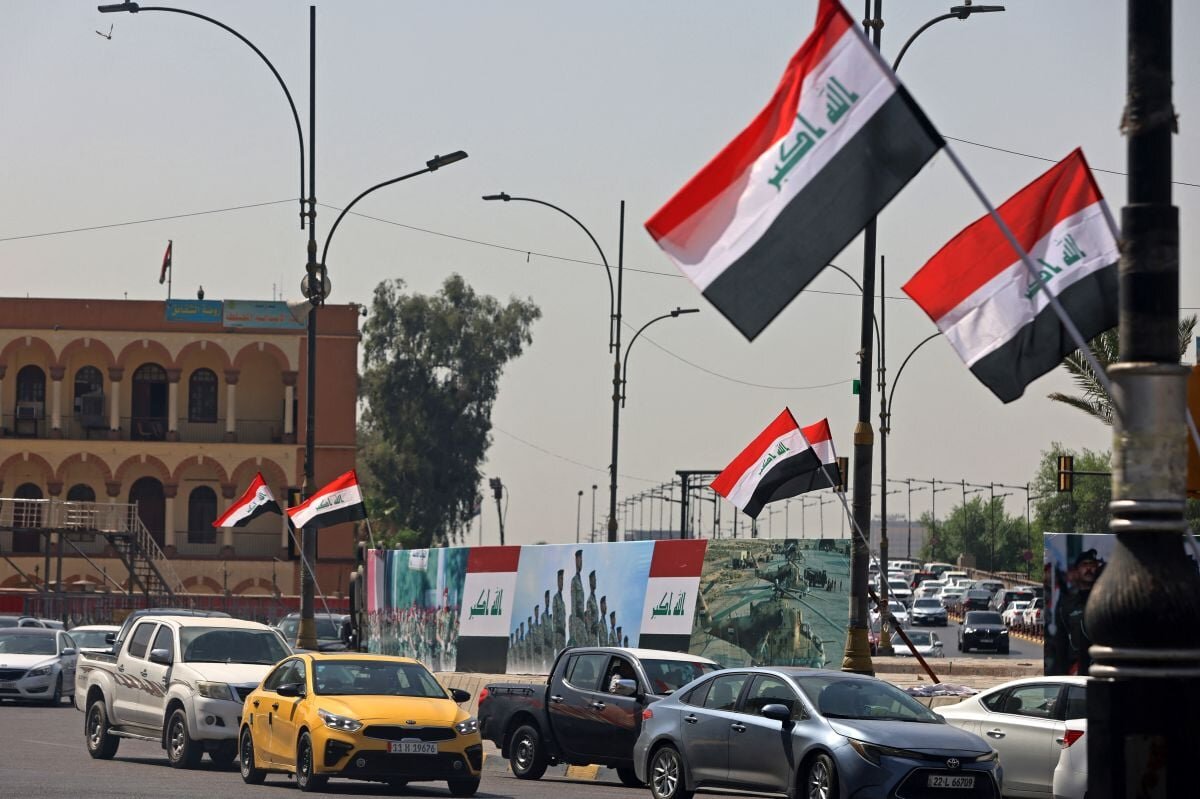
TEHRAN – Will Baghdad truly be able to make its own decisions? This is the question many Iraqis are asking following the September 30 celebration of what is known as “sovereignty day.”
Has Iraq escaped the restrictions of foreign military presence only to enter another form of control that is less obvious and may last even longer? This matter can no longer be delayed, especially after U.S. forces, under a coalition of about 82 countries, completed their withdrawal from their last bases at the end of September 2026.
This marked a victory for those who fought in the battles of dignity, honor, and resistance. At the same time, Iraq and Turkey reached an understanding to gradually transfer the Bashiqa-Zilkan base to the Iraqi government. Several other steps to strengthen Iraqi state sovereignty are also waiting to be settled through national and foreign negotiations that lie ahead.
This event has closed a difficult chapter that, in many different forms, began in 2003. But it does not answer the harder question: Will Iraqis truly have the power to make their own decisions?
Sovereignty cannot simply be measured by the absence of foreign soldiers. That is only partial sovereignty. Real sovereignty is measured by a state’s ability to make decisions, carry them out, and accept the cost of those decisions. Only then does it truly deserve to be called sovereign.
As a matter of principle, even before considering the facts on the ground, neither the legal nor the geographical answer is sufficient. A state recognized by the international community must have institutions with the power and independence necessary to exercise full sovereignty in practice. Only then can sovereignty move from being a formal principle written into the constitution to something real on the ground.
For this reason, a distinction must be made between formal sovereignty and effective sovereignty. Formal sovereignty means that the state is legally independent and free from foreign authority. Effective sovereignty, by contrast, means that the state itself possesses the capacity to exercise that independence in practice, making and enforcing its own decisions across the country.
What has been achieved at the first level is not a small thing. It would not be reasonable to call for state sovereignty while ignoring the departure of a foreign military force that had been the subject of deep political and legal disagreement in the country for more than two decades. But the first step, important as it is, is only the beginning. What comes next is much harder.
What has been achieved at the first level is not a small thing. It would not be reasonable to call for state sovereignty while ignoring the departure of a foreign military force that had been at the center of deep political and legal disagreement in the country for more than two decades. But the first step, important as it is, is only the beginning. What comes next is much harder.
The Iraqi contradiction that has emerged in reactions to the withdrawal itself is difficult to ignore. Some groups see it as a political and security victory for themselves, while others warn of possible security gaps and the return of Daesh cells, in a different form, to vulnerable areas following the end of the U.S. military occupation.
This shows the difference between independence and capacity. A country may be legally independent while remaining weak in practice. It may have the right to make its own decisions in theory while lacking the means to carry them out. Modern states do not simply declare themselves sovereign; they must build the power and capacity necessary to protect and exercise that sovereignty.
This requires a state built on institutions rather than competing centers of power that share control, influence, and resources.
What Iraq needs is an independent national will based on the country’s interests, security, laws, and the needs of its people. Through its legitimate institutions, Iraq itself should determine the nature of its relations with Washington, Ankara, Riyadh, Tehran, Cairo, Amman, and every other capital.
This does not mean calling for isolation. A sovereign state can form alliances, draw on the experience of other countries, sign security and economic agreements, and develop broad strategic partnerships. The important distinction is that it does so according to its own decisions and to strengthen its own capabilities, rather than out of a lack of those capabilities.
Relations with Iraq should be based on equal treatment and shared interests, not on what can be taken from it while it is busy dealing with its own wounds.
Sovereignty is a combination of many kinds of power, and they cannot be separated. A state that does not have a strong economy, a reliable financial system, reasonably independent technology and infrastructure, highly capable institutions, and international relationships that give it room to act will remain open to pressure and control, especially when that pressure comes from Washington.
When it comes to economic sovereignty, Iraq has spent the past two decades receiving more than nine-tenths of its government budget from oil sales. The income from this oil is deposited in an account connected to the U.S. financial system. Sending dollars abroad is also subject to compliance and checking rules imposed by correspondent banks. As a result, Iraq’s banking sector itself has become unable to fully depend on the world’s trust in it.
Iraq has become a country that pays the salaries of millions of employees from one main source of income, sells that resource in one currency, and yet cannot honestly say that its economy is free.
When it comes to energy and water sovereignty, Iraq imports gas, oil products, and electricity. At the same time, its Turkish neighbor controls much of the water flowing from the upper Tigris and Euphrates rivers in the north. These rivers are a lifeline for central and southern Iraq, leaving Iraqi summers dependent on decisions made in Ankara.
This weakness is the fault of the state, diplomacy, poor planning and absence of a national strategy for governing the country. Neighbors have watched Iraq’s great natural wealth become a burden instead of being turned into industry, agriculture, refineries, and transportation networks. This makes no sense and cannot be accepted as normal. As a result, control over shared resources has become a bargaining tool rather than the basis for cooperation and partnership.
In the area of digital sovereignty, Iraqis live their daily lives using platforms, services, and computer servers that they do not control. Their personal information, messages, and family photographs are stored in data centers far across the seas. The state sometimes even shuts down the entire internet during exam periods because it has no other way to stop cheating. In doing so, it punishes an entire society because one institution cannot solve a problem.
In education and culture, sovereignty also faces difficult questions about school programs, universities, and scientific research. Who is shaping the minds of the next generation? Who is giving them the tools to understand the region and the world and produce something useful? Do universities graduate students who will build the country, or people who look for a way to leave it?
As for military sovereignty on land, at sea, and in the air, it requires an army and a Popular Mobilization Force with a unified command and military doctrine. It also requires an air defense system capable of protecting Iraqi airspace, most of which is still exposed. Iraq also needs its own military industry, even if it is modest, to reduce its complete dependence on one source for weapons, spare parts, and training.
Every oil revenue that, over the past decades, failed to become a school, factory, university, power station, bank, or national company represents part of the national strength Iraq lost. When the moment comes to make an important decision, Baghdad suddenly discovers that the wealth it consumed was never turned into real power.
The experiences of other nations can show Iraq a possible path, without suggesting that their models should simply be copied. For instance, nations that came out of war were among the poorest countries in the world. They invested in education and industry and eventually became able to negotiate with powerful countries because they had something of their own to offer.
These countries succeeded because they understood that sovereignty is built through long-term work, not through loud slogans. Iraq has enough resources, a good geographical position, and talented people. What it lacks is something that cannot simply be bought in a market: a united political will that puts the state above the political party and public interest above personal gain.
Recognizing how difficult the task is does not justify delaying it. The period after the U.S.-led forces leave Iraq could make the cost of reform much higher if there is no banking reform, economic diversification, or rebuilding of the country’s security and education institutions.
From the point of view of the people, who matter most, sovereignty is not a privilege for those in power or a decoration used in political speeches. It is a guarantee of a citizen’s everyday life. It means electricity that does not disappear because of a decision made outside Iraq. It means water reaching Basra is safe to drink. It means a salary that does not depend on changes in the mood of the U.S. Federal Reserve.
The departure of the U.S.-led forces is a major event in Iraq’s modern history. It is a legitimate step toward recovering some of the sovereignty lost because of direct U.S. intervention in Iraqi affairs, as well as what followed from the Israeli regime’s involvement in different forms: military, ideological, political, social, cultural, and geographical terrorism, targeting both Iraq’s democratic experience and its society.
The question before was: When will the foreign forces leave? The question now is: What comes after sovereignty? It is time for those who hold the power to govern and make decisions. From now on, there will be no one else to blame for failures in running the state.
Leave a Comment